1
Research the workflow
Start from observed behavior, real cases, volume, exceptions, spend and the people who own the process.
- Past cases and event data
- Current systems and workarounds
- Economic buyer and constraints
Product research & software development
I study business workflows, validate the problem and economics, then design and build software, integrations and internal tools around what is actually worth automating.
B2B workflows · Integrations · Internal tools · Web products
Selected work
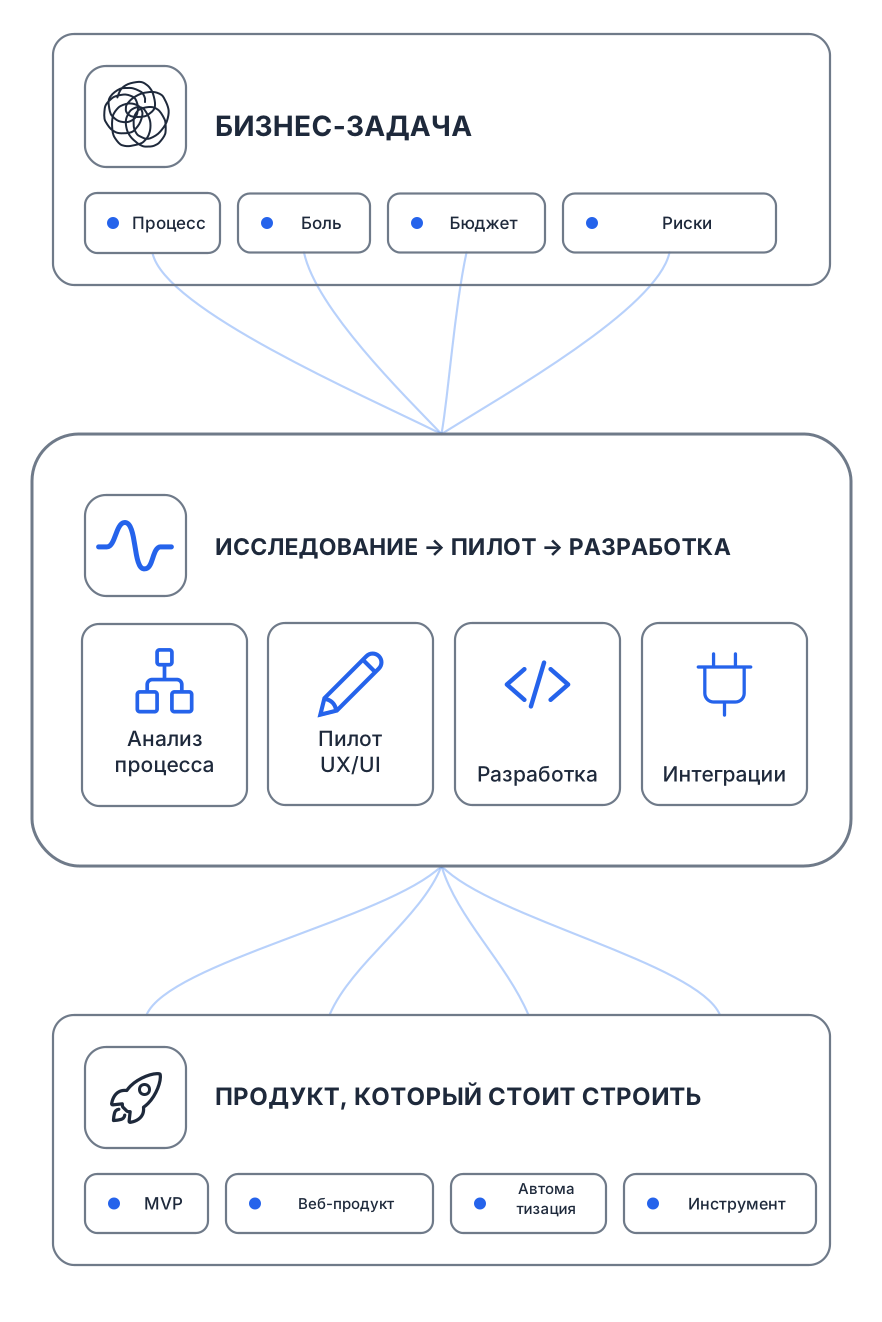
Research, validate, integrate, build
Map the current process, identify manual exceptions, existing spend, constraints and the real owner of the problem before proposing software.
Build web products, APIs, integrations and internal tools that fit the existing stack instead of replacing working systems without a reason.
Start with a measurable pilot, compare it with the current stack or integrator, and scale only when the economics and repeatability hold.
Real software I have built and shipped
Configurable multi-level visual navigation for online stores.
read caseFrom one costly workflow to a working software pilot
I can research a workflow, map the current systems and alternatives, prototype the smallest useful intervention and build the integration or product if the numbers justify it.
Evidence before architecture. Existing systems before replacement. Measurable outcomes before scale.
Start from observed behavior, real cases, volume, exceptions, spend and the people who own the process.
A new product has to beat the current process, an in-stack improvement or a custom integration — not an imaginary blank slate.
Build the smallest test that can change the decision. If the economics or repeatability do not hold, stop instead of expanding scope.
Where research and software usually meet
Onboarding, account operations, approvals, exceptions and partner workflows.
Connect existing portals, CRM/ERP systems, external services and internal data flows.
Operational interfaces, queues, admin tools and automation for repetitive work.
Small paid pilots that test demand, economics and repeatability before a full build.
I research repeatable business workflows before deciding what should be built.
Volume, manual exceptions, active time, current spend and the consequences of delay or error.
A separate product only makes sense if it beats an in-stack improvement, integrator or manual process on the same scope.
For research conversations, anonymized counts, ranges and one representative case are usually enough. I do not need customer data or trade secrets.
It is usually about one specific workflow I observed in your market. The goal is to understand how it works in practice, what is already automated and whether any meaningful residual problem remains — not to ask for a generic sales meeting.
Reply or write directlyA practical path from one workflow to a production decision
Define one event, one owner, one outcome and the current systems involved.
Use recent cases to measure volume, active minutes, errors, current spend and constraints.
Compare doing nothing, improving the existing stack, custom integration and a separate product on the same scope.
Test the smallest useful change with before/after metrics and a deliberately narrow integration surface.
Turn the pilot into a reusable product only if the economics, deployment and support remain repeatable across customers.